Introduction
When you start looking at open plots in Hyderabad, one of the first things that confuses buyers is the way size is described. One seller talks in square yards, another in guntas, a third in acres, and a brochure may use square feet. The numbers can look similar, but they mean very different things. A small mix-up here can lead to a wrong price comparison or a plot that does not fit the house you have in mind.
This guide explains the common units in simple words, shows how to compare plots fairly and lists the checks to make before you book. It does not give prices or market figures. Always confirm the exact size from the documents of the plot you are looking at.
Quick answer
In and around Hyderabad, residential plots are most often described in square yards. Larger land parcels are described in guntas and acres. Square feet is used for built-up areas. To compare plots, convert everything into one unit, ask for the measurement as written in the sale deed or layout plan, and walk the boundary on site.
The units you will hear
Square yards
This is the everyday unit for residential plots in Telangana. When a seller says “200 gajam” or “200 square yards”, they usually mean the same thing. The word “gajam” is a local way to say square yard. Plots in gated layouts are commonly sold in square yards.
Square feet
Square feet is the unit for buildings, rooms and carpet area. One square yard is nine square feet. If a builder tells you the built-up area of a house in square feet, do not compare it directly with a plot size in square yards. Convert first.
Guntas
A gunta is a land unit used in Telangana for larger parcels, often agricultural or semi-urban land. One gunta is 121 square yards. You may hear it when a layout is carved out of a bigger parcel or when you read older records.
Acres
An acre is a larger unit again. One acre is 40 guntas, which is 4,840 square yards. Acres are used for big parcels and farmland, and for describing the total size of a layout.
Cents and other local terms
In some places you may also hear terms such as cents or local names for land measures. If a term is new to you, ask the seller to write it in square yards and to point to the same figure in the documents.
A simple conversion table
| Unit | Equal to |
|---|---|
| 1 square yard | 9 square feet |
| 1 gunta | 121 square yards |
| 1 acre | 40 guntas, or 4,840 square yards |
Use these as a quick guide and always check the figures in your own documents. A calculator on your phone is enough for the rest.
How to compare two plots fairly
- Write both sizes in square yards. This removes the confusion between units.
- Check the shape. Two plots with the same area can be very different. A wide, regular plot is easier to plan than a narrow or irregular one.
- Check the facing and the road. Ask which side the road is on and how wide it is as per the layout plan.
- Ask what is included. Some quotes are for the plot only, others include extras. Ask for the same details from each seller.
- Compare the same kind of plot. A corner plot, a plot in an approved gated layout and a plot in an older layout are not the same thing.
Where the size is written
The size of a plot appears in several places. It helps to look at all of them and see that they agree.
- Layout plan: shows each plot number, its dimensions and its road access.
- Sale deed or draft deed: states the area of the plot being transferred.
- Allotment letter or agreement: may state the area and the plot number.
- Brochure or advertisement: useful for a first look, but it should not be your final proof.
If the numbers differ, ask the seller to explain why and to correct the paper trail before you pay a booking amount.
Plot size versus the house you want to build
Many buyers choose a plot size and only later find out how much of it they can use. Local building rules can ask for open space around the house, which is called a setback, and the rules depend on the plot and the road. This is why a larger plot does not always mean a proportionally larger house. Before you decide, ask a local architect or the planning authority what you can build on a plot of that size and shape. It is better to learn this before you buy.
Walking the plot on site
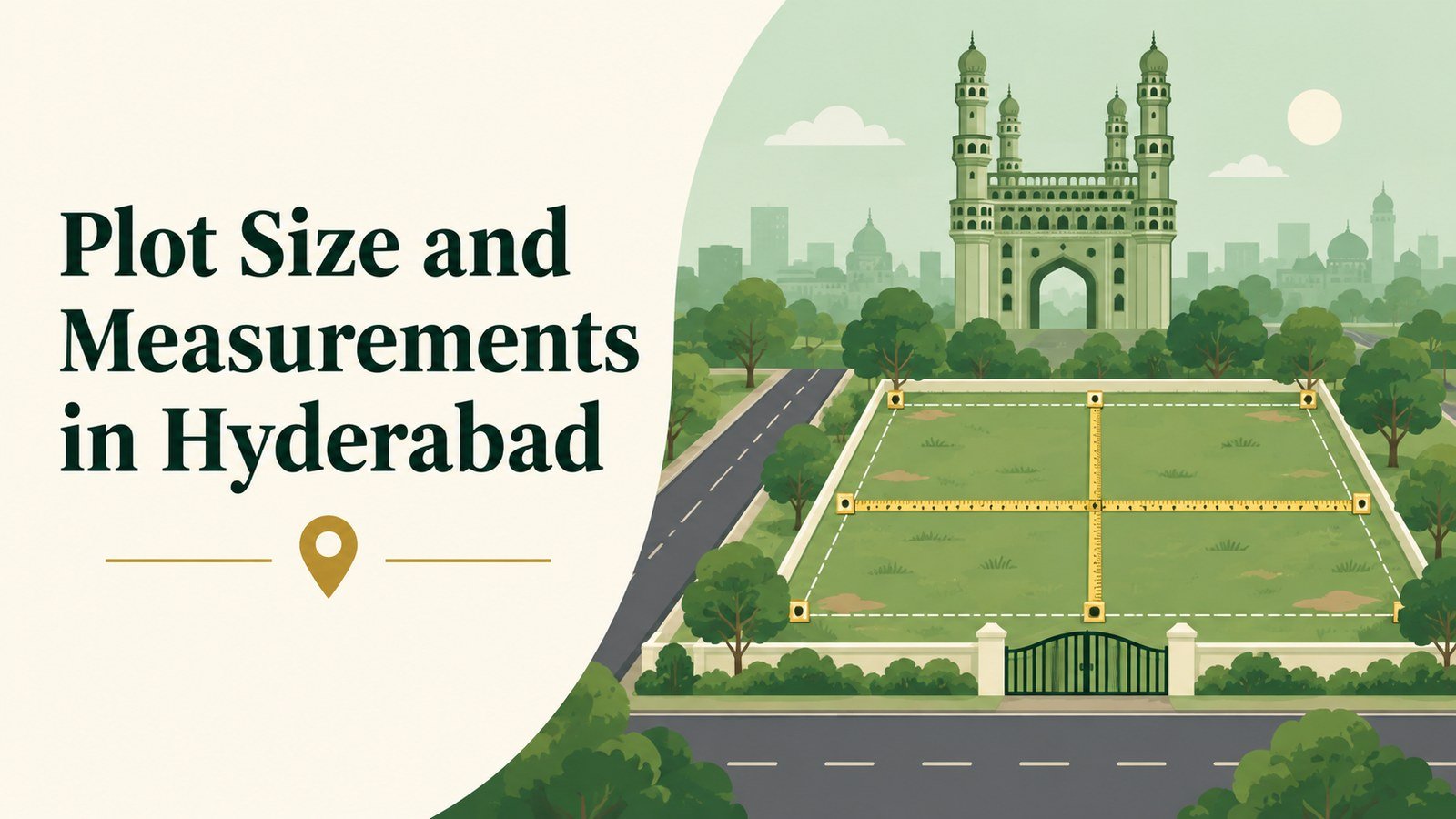
A site visit is the best way to check the size with your own eyes. Take the layout plan with you and look for the boundary markers. If the layout has marked stones or fences, check that the plot you are shown matches the number on the plan. Measure with a tape if you can, or ask the seller to show the corners. If the boundary is not clear, do not move ahead until it is. Our open plot site visit checklist lists more points to look for.
Common mistakes to avoid
- Comparing prices when one seller uses square yards and another uses square feet.
- Assuming a brochure size is the same as the size in the deed.
- Forgetting to ask about the shape and the road width.
- Not checking boundaries on the ground.
- Choosing a plot size without checking what can be built on it.
Questions to ask the seller
- What is the exact plot size in square yards, and where is it written in the documents?
- What are the length and width of the plot, and which way does it face?
- What is the road width in front of the plot as per the layout plan?
- Does the plot size in the layout plan match the size in the draft sale deed?
- Are the boundaries marked on site?
Our questions to ask before booking an open plot guide goes through more.
Frequently asked questions
What is a gajam?
Gajam is the local word for square yard, so a 200 gajam plot means 200 square yards.
How many square feet are in a square yard?
Nine square feet make one square yard.
How many square yards are in a gunta?
One gunta is 121 square yards.
Is the size in the brochure the final size?
No. The final size is the one written in the legal documents. Always match the two.
Who can help me check the measurement?
A licensed surveyor can measure the plot on site, and a lawyer can check that the paperwork agrees with it.
Conclusion
Plot sizes in Hyderabad are described in a mix of units, but once you convert them into square yards, comparing plots becomes simple. Ask for the size in writing, match it with the layout plan and the deed, and walk the boundary before you book. If you would like help to shortlist plots at your own pace, you can explore the options at Housing Pandas.