Quick answer: before you pay for an open plot in Hyderabad, visit it more than once and check what you can see with your own eyes: the boundaries against the layout plan, the access road, the surroundings, the soil and water situation, and what the neighbours say. A site visit does not replace legal checks on the documents, but it catches problems that papers cannot show.
Why the site visit matters as much as the paperwork
Most advice about buying an open plot focuses on documents, and that advice is right. Our guide to the open plot documents checklist for Hyderabad buyers covers the paper side. But a plot is a physical place. A perfectly clean set of documents can still sit next to a problem you only notice when you stand on the land: a narrow approach, a low spot that collects water, a boundary that does not match the plan, or a neighbouring activity that you would not want next to your home.
A site visit also helps you decide whether you can actually imagine living or investing there. Photos and brochures are shot to look their best. The ground does not care about angles. This guide gives you a practical order of things to check, questions to ask, and mistakes to avoid. It is general information and does not replace advice from a qualified property lawyer or a licensed surveyor.
Before you go: prepare for the visit
A little preparation turns a casual drive into a useful inspection.
- Ask the seller or layout developer for the plot number, the layout plan and the exact location pin.
- Carry a printout or a clear photo of the layout plan so you can compare it with what you see.
- Bring a notebook or use your phone to record notes, photos and short videos at each corner of the plot.
- Take a measuring tape or a long rope, and ask a friend or family member to come along as a second pair of eyes.
- Wear comfortable shoes. Open land can be uneven, wet or overgrown.
- Tell the seller you plan to take your time. A good seller will not rush you.
If you can, bring someone who knows land, such as a surveyor or an experienced relative. If not, do the first visit yourself and book a second visit with a professional once you are serious.
Find the plot and match it to the plan
The first job is to be sure you are looking at the right piece of land. In a large layout, plots can look identical. Boundary stones may be missing or moved, and plot numbers may be painted on a few stones only.
- Locate the plot number on the ground and compare it with the layout plan.
- Check that the plots on the left, right and back match the plan, not just your own plot.
- Look for boundary stones or markers at all four corners.
- Measure the front and the depth if you can, and compare the numbers with the plan and the sale papers.
- Note the direction the plot faces and check that it matches what you were told.
If the plot you are shown does not match the plan, stop and ask why. Do not accept a verbal explanation alone. Ask for a corrected plan or a written clarification, and show it to your lawyer.
Check the access road
Access is one of the most important parts of any plot. A plot you cannot reach properly is hard to build on and hard to resell.
- Is there a road to the plot today, or only a promise of one?
- Is the road wide enough for a car, a construction truck and a water tanker to pass?
- What is the surface: tarred, gravel, mud or an unmade track? How does it look after rain?
- Does the layout plan show the road width, and does the road you see match it?
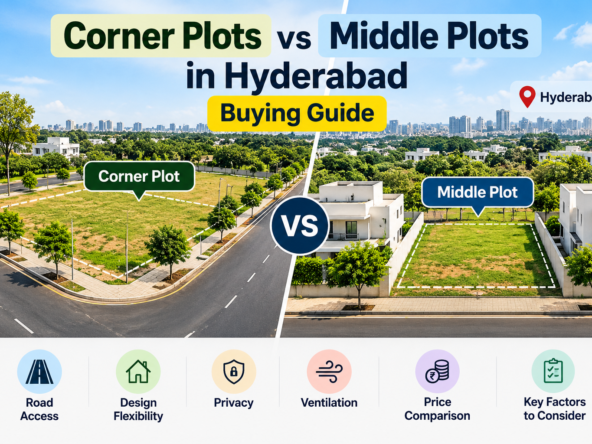
- Is the plot on a corner, on a dead end or in the middle of a row?
Walk the route from the nearest main road to the plot. Note the turns, the narrow points and any place where a vehicle might struggle. If you can, visit once after rain to see how the road behaves.
Look at the shape and the level of the land
The shape and the level of a plot affect how easy and how costly it will be to build. Stand at the centre and look around.
- Is the plot a regular shape, such as a rectangle, or an odd shape with narrow corners?
- Is the ground level, sloping or uneven? Is it higher or lower than the road?
- Are there pits, mounds, large rocks, trees or old structures on the plot?
- Do you see any sign of water standing or marks that suggest water collects here?
A plot that sits lower than the road can collect rainwater and may need filling and levelling, which costs money. A plot with big rocks may need extra work before construction. A surveyor or a builder can tell you what a particular feature means for your plan. Ask them rather than guessing.
Observe the surroundings
The area around the plot matters as much as the plot. Spend time walking the neighbourhood.
- What is built nearby: homes, shops, farms, workshops or empty land?
- Are there any activities that could bother you, such as noise, dust, smell or heavy traffic?
- Are other plots in the layout being built on? Occupied surroundings often make daily life easier.
- Is there a lake, a nala, a canal or a drain close by? If so, ask your lawyer and surveyor to check whether any rules or restrictions apply near it.
- Are there high-tension lines or large towers close to the plot?
Look at the daily life around the plot. Where would you buy groceries, find a clinic or send children to school? Check the travel time to your workplace at the time of day you would actually travel. Our guided walkthrough for buying a plot in Hyderabad explains how to compare locations in a calm, step-by-step way.
Ask about water, power and drainage
An open plot often comes without connections. Ask clear questions and note the answers.
- Where will drinking water come from: a municipal line, a borewell, tankers or another source? Ask neighbours how reliable it is across the year.
- Where is the nearest electricity line, and who arranges and pays for a connection?
- How does rainwater drain from the layout? Look at the drains and the slope.
- What happens to waste water? Ask whether a sewer line exists or whether septic tanks are the norm.
Do not accept a vague “it will come soon”. If a developer promises roads, drains, parks or water lines, ask where the promise is written down and by what date it should be completed. Keep a copy.
Talk to people who already live there
Neighbours are one of the best sources of honest information, and they cost nothing.
- Ask how long they have lived or owned land in the area.
- Ask about water, power cuts, road conditions during rain and mosquito or flooding problems.
- Ask whether anyone has had trouble with the seller, the developer or the layout.
- Ask about plans they have heard of for the area, then treat these as rumours until you see something official.
Be polite and speak to more than one person. If answers differ a lot, note it and look deeper. Remember that people can be mistaken, and a neighbour who owns land nearby may also have an interest in the area looking attractive.
Check for signs of dispute or occupation
When you walk the plot, look for anything that suggests someone else is using it or claims it.
- Boards or notices that mention another name, a legal case or a warning.
- Fences, sheds, crops, parked vehicles or construction materials on or near the plot.
- Paint marks or stones that suggest a different boundary from the one you were shown.
- Anyone who approaches and says the land is theirs or is under dispute.
Take photos of anything unusual and share them with your lawyer. A single odd sign is not proof of a problem, but it is a reason to ask more questions before you pay.
Visit more than once and at different times
One visit at midday on a sunny weekend tells you only part of the story. If you can, visit at least twice.
- Visit in the morning and in the evening to see light, traffic and noise.
- Visit on a weekday and on a weekend.
- If the season allows, visit after rain to see drainage, mud and standing water.
- Go once without the seller, so you can look and talk to people freely.
Our guide to buying an open plot in Hyderabad with a location-first approach explains why the area and its daily life deserve this kind of attention.
A simple site visit checklist you can print
- I found the plot number on the ground and matched it with the layout plan.
- The neighbouring plots match the plan.
- I saw boundary stones or markers at all four corners.
- I measured or estimated the front and depth, and the numbers look consistent with the papers.
- I walked the road from the main road and noted its width and surface.
- I checked the shape and level of the plot and noted any pits, rocks or trees.
- I looked at the surroundings and noted anything that could bother me.
- I asked about water, power and drainage and wrote down the answers.
- I spoke to at least two people who live or own land nearby.
- I looked for signs of dispute, occupation or notices.
- I took photos and videos of every corner and the approach road.
- I plan a second visit at a different time of day.
Common mistakes buyers make on site visits
- Going only once. A single short visit leaves a lot of unknowns.
- Going only with the seller. Sellers can guide you well, but you should also look and listen on your own.
- Trusting a pin on a map alone. A map pin can be off by some distance. Confirm the plot on the ground against the plan.
- Ignoring the road. A plot without proper access is a problem no matter how good the price looks.
- Skipping the neighbours. They often know things the brochure does not say.
- Paying a booking amount straight after a good visit. Feeling good about a place is not the same as having it checked. Do your document checks and legal review before you pay.
- Relying on promises. If something matters to you, such as a road, a park or a water connection, ask for it in writing.
What to do after the visit
After the visit, sit down with your notes and photos the same day, while things are fresh.
- Write down what you liked and what worried you.
- Compare what you saw with the layout plan and the documents.
- List every question that is still open.
- Share your photos and notes with your lawyer and, if needed, a surveyor.
- Ask the seller for written answers to the questions you raised.
- Take a few days to think before you commit.
A good plot will still be a good plot after you have taken a few days to check. If you feel pressure to decide immediately, treat that as a signal to slow down.
How Housing Pandas can help
Housing Pandas focuses on open plots in and around Hyderabad. If you would like to see plots in a particular area, understand what to look for on the ground, or compare locations before you visit, you can reach the team through the contact page. A site visit is easier when you know what to look at, and the team can help you plan one. Always have your lawyer review the documents for the plot you choose.
Frequently asked questions
How many times should I visit an open plot before buying?
There is no fixed number, but more than one visit is wise. Visit at different times of day, and go once after rain if you can. Many buyers also bring a professional on a later visit.
Should I take a surveyor to the site?
If you are serious about a plot, a licensed surveyor can check the boundaries and measurements against the plan and the records. It is an extra cost, but it can prevent bigger problems later.
What should I photograph during a site visit?
Photograph all four corners of the plot, the boundary stones, the road leading to it, the neighbouring plots and anything unusual. Keep the photos with a note of the date.
Is it enough to see the plot on a map?
No. A map shows a location but not the ground. Always confirm the plot on the site against the layout plan.
What if the seller does not want me to talk to neighbours?
That is worth noting. A seller with nothing to hide usually has no reason to stop you from speaking to people nearby. You can visit again on your own.
Can I rely on what the seller tells me about water and power?
Treat verbal promises as claims to check. Ask neighbours, ask the relevant utilities where you can, and ask for any commitment to be written down.
Does a good site visit mean the plot is safe to buy?
No. A site visit shows the physical side. You still need the legal checks, including the title, the approvals and the encumbrance records, reviewed by a qualified property lawyer.
This article is general information and does not replace legal or professional advice. Rules and procedures can change, so confirm the current position for your plot with the relevant authority and a qualified lawyer.