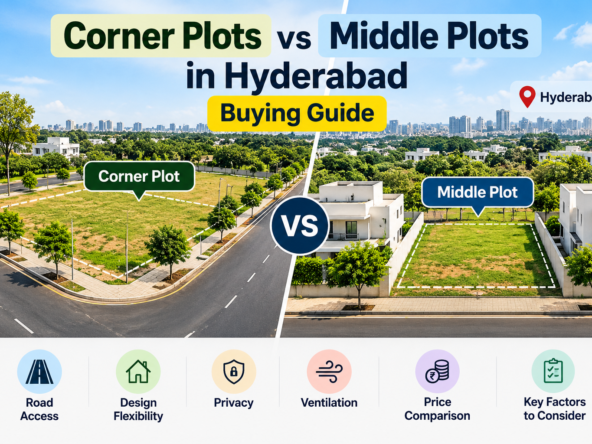
Buying an open plot is one of the most exciting purchases a family makes. It is also one of the easiest to get wrong. Apartments come with a builder, a brochure, and a hundred neighbours who have already asked the hard questions. A plot comes with none of that. What it comes with is a piece of land, a set of papers, and a seller who would like you to decide quickly.
Most problems first-time plot buyers run into are not bad luck. They are the same handful of mistakes, repeated by people who were in a hurry or did not know what to check. Here is what to watch for before you commit.
1. Falling for the Location Hype Without Visiting
A plot can look perfect in photos and on a map pin, and still be wrong for you. The approach road may be a mud track after rain. The “upcoming” main road may exist only in a presentation. The surroundings may be emptier than the listing suggests.
Visit the site yourself, at least once, and ideally at two different times of day. Drive the actual route you would take from your home or workplace. Stand on the plot and look at what is around it in every direction, not just what the salesperson points at. A plot you have not stood on is a plot you have not seen.
2. Treating the Papers as a Formality
Many first-time buyers glance at the documents, see something official-looking, and move on. The papers are not a formality; they are the purchase. You want to understand who owns the land, how they came to own it, and whether anyone else has a claim on it.
Ask for the title documents and the link documents that show the chain of ownership. Check that the person selling to you is actually the person entitled to sell. If the plot is part of a larger layout, confirm the layout itself is properly approved. If any of this feels dense, that is normal. A property lawyer’s review costs a fraction of what a disputed plot costs you.
3. Confusing “Approved” with “Safe”
Approval matters, but buyers often stop at the word itself. Ask which authority approved the layout and see the approval, not just a logo on a brochure. Understand what the approval covers: the layout, the roads, the plots as marked.
Be wary of plots sold with approvals “in process” or “coming soon.” Until an approval exists, it does not exist. If you are weighing HMDA and DTCP approved layouts, it helps to understand what each approval actually means before you treat it as a deciding factor.
4. Ignoring What Is Around the Plot
A plot does not exist alone. What borders it shapes your life on it. Check for things that are easy to miss on a quick visit: a nullah or low-lying stretch that collects water, a high-tension line crossing nearby, a dumping spot, or a noisy commercial use next door.
Also check the practicals: where does water come from, how is drainage planned, and is electricity available at the site or only “nearby”? These are not glamorous questions, but they decide whether your plot is buildable and liveable when you are ready.
5. Trusting the Map More Than the Ground
The layout plan shows neat rectangles. The ground may tell a different story. Plot boundaries should be physically marked, and the dimensions you are paying for should match what you can measure on site.
Walk the boundaries. Note the survey number and confirm it against the documents. If the plot’s size matters to you, and it should, verify it in square yards on the ground rather than taking the brochure’s word for it.
6. Rushing the Payment Trail
Excitement and urgency are a bad combination for payments. Pay through traceable channels, take proper receipts for every amount, and make sure the sale agreement reflects what was actually promised to you, in writing.
Be cautious of pressure tactics: “another buyer is coming this evening,” “the price goes up tomorrow.” A genuine plot will survive a few days of careful checking. A seller who cannot tolerate due diligence is telling you something.
7. Skipping the Conversation About What You Can Build
Buyers often assume that owning a plot means building whatever they imagine. Local rules decide setbacks, height, and how much of the plot you can cover. Before you buy, understand the broad building permissions that apply, so the home you are dreaming of is actually permitted on the land you are buying.
8. Believing Verbal Promises
Compound walls, internal roads, parks, water lines, “development will be done in six months.” If it is not written into your agreement, treat it as a hope, not a commitment. Get every promise documented, or discount it entirely when you decide.
9. Budgeting Only for the Plot Price
The plot price is the beginning, not the total. Registration and stamp duty, fencing or a compound wall, levelling and filling if the land needs it, and the cost of holding the plot until you build all sit on top. First-time buyers often stretch fully for the plot itself and are then surprised by everything around it. List these out before you decide your budget, so the plot you can afford to buy is also a plot you can afford to keep and use.
10. Not Deciding Why You Are Buying
A plot bought to build on soon and a plot bought to hold for years ask different questions. If you plan to build, water, power, road access, and neighbourhood readiness matter today. If you plan to hold, you care more about how the area is likely to grow and how easily the land can be looked after and kept clear of encroachment. Buyers who skip this question often pick a plot that fits neither plan well. Decide the purpose first; it makes every other check sharper.
11. Leaving the Plot Unattended After Buying
The mistakes do not end at registration. Open plots need looking after: clear boundary markers, an occasional visit, and prompt attention if someone starts dumping debris or testing your fence line. Encroachment is far easier to prevent than to reverse. Put the plot on your calendar the way you would any other asset you care about.
The Simple Pattern Behind Every Mistake
Look back at this list and one habit prevents almost all of it: slowing down. Visit twice. Read the papers or have them read. Measure on the ground. Write things down. The buyers who regret their plot purchase almost always skipped one of these. The buyers who love their plot did the boring work before the exciting part.
Take your time. The right plot will still be there after you have checked it properly, and if it is not, it was never the right plot.
Frequently Asked Questions
What is the single biggest mistake first-time plot buyers make?
Deciding before verifying. Most regrets trace back to a buyer who committed before checking the documents, the approvals, or the ground itself.
Do I really need a lawyer for a plot purchase?
It is strongly recommended. A lawyer who works on property matters can read the title chain and spot issues a layperson cannot. The fee is small compared to the risk of a disputed title.
How many times should I visit a plot before buying?
At least once, and ideally twice at different times of day. A second visit often reveals things the first one hid, from traffic on the approach road to waterlogging or activity around the site.
Is an approved layout always a safe buy?
Approval is necessary but not sufficient. Verify which authority approved it, see the approval document, and still do the rest of your checks on title, boundaries, and surroundings.